Why You Need A Technical Website SEO Audit
 Don’t just take our word for it. Browse one of our SEO case studies and see what we could be doing for you. We’ve worked across many sectors with businesses and charities of all sizes. We have experience that will benefit you.
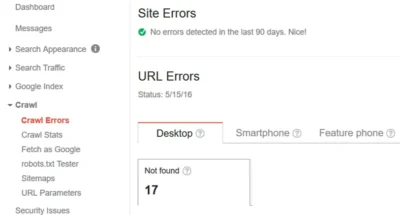
301, 302, and 404 Server Response Codes
Sometimes web pages redirect to another page, you probably won’t even notice when this happens. The codes that cause this to happen are ‘301’ – a permanent redirect. ‘302’ – a temporary redirect and a ‘404’ which indicates a page isn’t found.

Crawling/Indexing Issues

Knowing the best way forwards requires a diagnosis, which is where we come in.
Duplicate Content Issues
 Search engines don’t index lots of similar pages from your website.
If multiple product pages differ only by minor details (like colour variations) and don’t offer unique value, search engines may struggle to determine the most relevant page to show. This can lead to keyword cannibalisation, where ranking signals (such as backlinks and authority) are spread thinly across multiple URLs instead of consolidating on one authoritative page. To avoid this, canonical tags can be used to tell search engines which version to prioritise, or product variations can be handled on a single URL with dynamic content.
So while search engines can index these pages, they may not rank them effectively, and it’s best to optimise the structure to consolidate SEO value.
There may be a reason why the gold coloured widget should be the one you want listed but you are handing that decision to the search engine unless you take steps to resolve the issue using canonicalisation techniques.
Similarly, if you use a standard product description, perhaps supplied by a manufacturer then you will have duplicate content on your website because hundreds or even thousands of other websites will have exactly the same words on their site (unless you are the only person online selling that particular item – unlikely!).
Best practice is to rewrite the content yourself or with a copywriters help. If you can’t avoid using certain terms then you can at least dilute the amount of duplicate content by adding in your own thoughts, comments or a thorough review. Go back to basics and review your EEAT credentials.
XML Sitemap Issues
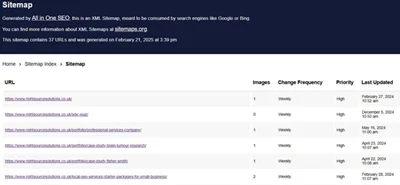 An XML sitemap remains essential for any website, serving as a roadmap to help search engines efficiently explore and index your content. Submitting your sitemap through tools like Google Search Console accelerates the indexing process, especially beneficial for new or frequently updated sites.
Maintaining control over your sitemap allows you to specify canonical URLs, mitigating duplicate content issues. However, it’s crucial to ensure your sitemap is dynamic, automatically updating to reflect any changes to your site’s structure or content. Static, manually generated sitemaps can quickly become outdated, potentially hindering effective indexing.
While numerous sitemap generators and content management system plugins are available, it’s important to configure them correctly. For instance, consider whether including every image or video is necessary, as this could dilute the focus on your primary content pages. Additionally, ensure that only indexable pages i.e. those not blocked by robots.txt or marked with ‘noindex’ tags are included in your sitemap.
Finally, always declare the location of your XML sitemap in your robots.txt file. This practice guides search engine bots to your sitemap, facilitating more effective crawling and indexing of your site.
By adhering to these updated practices, you can enhance your site’s visibility and ensure that search engines accurately index your content.
Site Loading Time
 Google has made the site loading time a more important factor over time and this is an area that can nearly always be improved. Aside from search engines, your visitors will also abandon your website if it takes too long to load.
There are loads of site speed measuring tools on the web, you may like Pingdom which is one of the best.
Once you have a baseline from which to improve you will need to look at image sizes and how to compress them. An expert can advise on bloated code which can also slow things down dramatically. One solution to consider, especially where you have a global audience is to use a CDN service. The CDN copies your website to servers in different locations and uses the one nearest the visitor to deliver the content making the overall experience quicker.